
BLOG
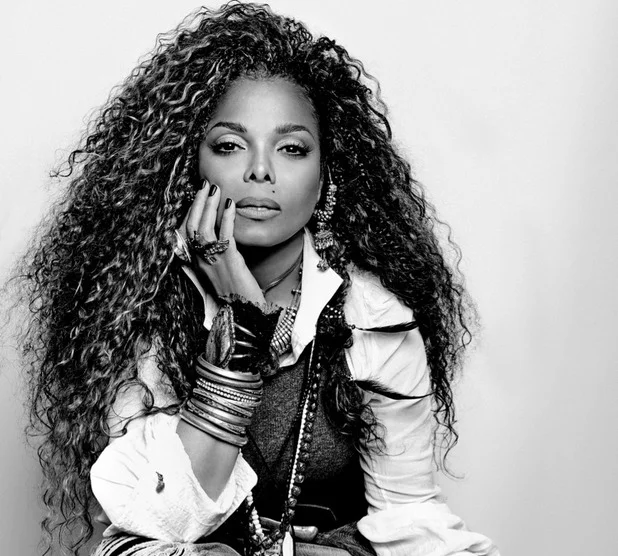
The “Unbreakable” Staying Power Of Janet Jackson
When you think about it - Janet Jackson was the ultimate underdog. The youngest of 9 children, Janet was born the same year that her older brother, Michael (8 years her senior and musical prodigy), began singing with his brothers in the Jackson 5. By the time Janet appeared on stage at age 7, her brothers were stars, and the family had already uprooted from Gary, Indiana to Encino, California.
When you think about it - Janet Jackson was the ultimate underdog. The youngest of 9 children, Janet was born the same year that her older brother, Michael (8 years her senior and musical prodigy), began singing with his brothers in the Jackson 5. By the time Janet appeared on stage at age 7, her brothers were stars, and the family had already uprooted from Gary, Indiana to Encino, California.
You might argue that she was no underdog, but if the performance of her eponymous debut is any indication, I have a strong retort. The record, while good, was usurped by her older brother. I don’t think anyone could have accurately predicted the impact “Thriller” would have on music, but it certainly did nothing to save his sister’s record from the bargain bin. Her second record, “Dream Street,” fared even worse. It barely charted, and has never earned any RIAA designation. By 1985 the assumption was that Janet would just be an actress.
Then “Control” happened, followed by “Rhythm Nation 1814,” followed by “Janet,” followed by “The Velvet Rope.” “TVR” has been widely touted as Jackson’s masterwork. High production value, introspective lyrics and powerful imagery all converged to make an impressive impact. It was almost for naught though. Not only was “TVR” hard to make, it was hard to sell too. The record was saved through Jackson’s tenacity and a successful tour.
In the years following “TVR,” Jackson remained notable, but she wasn’t making generally interesting music. Interesting note, prior to this time, it was easy for the press and public to pass off Jackson’s success as a combination of family name, svengali producers and a songwriter husband. It was only after this that we got to see the importance of Jackson in her recording process. By the time “All For You” (2001) surfaced, it’s been reported that Jackson wasn’t as involved in the process as before. By the time “20 Y.O.” (2006) arrived, we were looking for any glimpses of the Janet we once knew and loved. “Discipline” (2008) was a bit of a bright spot, but it still wasn’t quite her.
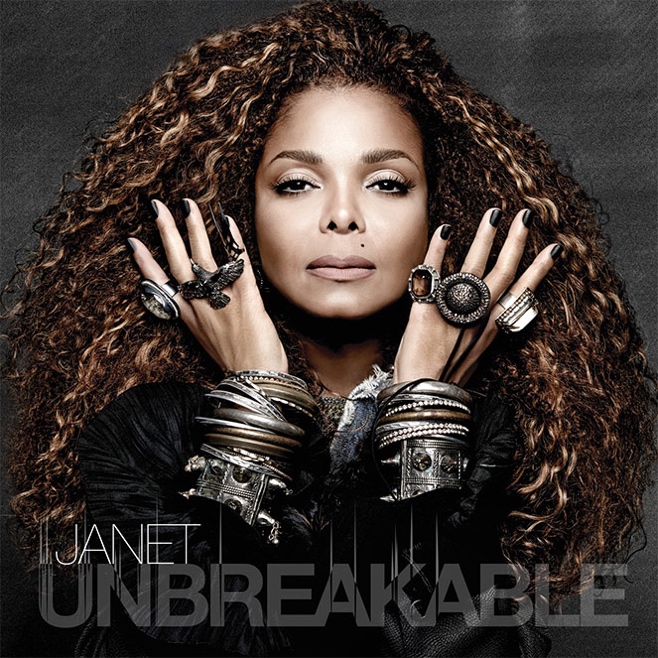
I will admit, I didn’t expect a Janet Jackson record in 2015. Unpacking the surprise of “Unbreakable” isn’t easy for me. It’s a pop record with R & B sensibilities. It’s a modern record with a classic feel. It’s an introspective record. This really surprised me, because it appeared that Janet did the thing that most aging pop stars do - keep trying to do the things they’re known for doing in a young and “hip” way, even though they’re no longer young, and their fans may be slightly past the point of “hip.” When the promotion began we were treated to a covered up Janet (no more sexy midriff) and a more adult contemporary first single that was slinky, but not overtly sexual.
The gamble appears to be paying off. While not a masterwork, “Unbreakable” is a fitting entry into the Janet Jackson catalog. It’s contemporary without being trendy. It sounds more like a follow up to “The Velvet Rope” than the works in between. The record sounds like a love letter to her brother, Michael, and a thank you to her family and fans. (The timbre of Janet’s voice is eerie at some points on this album. It’s almost as if Michael is guest appearing.)
Janet Jackson has done the thing that her brother couldn’t seem to do. With “Unbreakable,” Janet has effectively taken her sound and lyricism that she’s known for and placed it in a modern setting without sounding dated. Janet is both present and accounted for here. She’s proven that Rolling Stone Magazine cover story title was no fluke. She’s once again triumphant.
The End of An Era – Michael Jackson’s “HIStory: Past, Present and Future, Book I” Turns 20
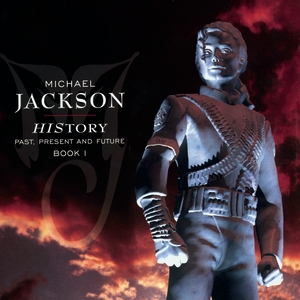
By the time that Michael Jackson released “HIStory – Past, Present and Future – Book I” on May 1, 1995 the music landscape was radically different than when he released “Dangerous” just a short 4 years earlier. Rap music had (particularly the annoyingly coined “Gangster Rap”) taken over the urban music landscape, and suddenly everyone from EnVogue to Massive Attack to Janet Jackson were all sampling James Brown or Parliament. Jackson’s rival ditched The Revolution, changed his name to an unpronounceable symbol, and proceeded to make uneven funk records with the New Power Generation.
By the time that Michael Jackson released “HIStory – Past, Present and Future – Book I” on May 1, 1995 the music landscape was radically different than when he released “Dangerous” just a short 4 years earlier. Rap music (particularly the annoyingly coined “Gangster Rap”) had taken over the urban music landscape, and suddenly everyone from EnVogue to Massive Attack to Janet Jackson were all sampling James Brown or Parliament. Jackson’s rival ditched The Revolution, changed his name to an unpronounceable symbol, and proceeded to make uneven funk records with the New Power Generation.
Michael Jackson was still the most iconic black artist in music, although by 1995, he physically didn’t resemble a black artist at all. His ever changing, pasty-white face, the surgical masks to go to the zoo, that hyperbolic sleep chamber thingy (ok, that was a rumor, but it’s a good one) – Michael was no less than eccentric (read, for black people, “weird as hell”), but he was ours, and there was no giving him up.
Signs that things were going to go awry this go round started fairly early – in 1993 child sexual abuse allegations surfaced (which were settled out of court in 1994) and then he married Lisa Marie Presley the following year. An act forever ingrained in the memory of the world with a really awkward-looking MTV Awards kiss.
On the heels of all of that Sony and MJJ launched a massive promotional effort in the lead up to the release of “HIStory….” It included huge Michael Jackson promo statues, as if we needed help knowing who Michael Jackson was, and a 4+ minute epic mini-film. In the film Michael is the General of some pop icon army and is walking through a crowd of fainting people to the unveiling of his Statue of MJ. It was grand.
By the time the album arrived we already knew it’s fate. The first single, “Scream,” featured his little sister Janet (who was at the peak of her career following her multi-platinum “Janet” release and tour), but the song, while a classic, never made it to the top of the Pop or R&B charts at all (landing in and peaking at #5 on the Hot 100). To add insult to that injury the music video for “Scream” still holds the title for the most expensive video ever made ($9M) … for a song that never hit #1 in America. I am sure Sony was reeling from that. (Note: The video for “Scream” is one of the best videos that I’ve ever seen!)
“HIStory…” wasn’t a bad album, but it did officially mark the end of Michael Jackson’s reign as the chart topping King of Pop. It was a double album with Disc 1 being a greatest hits compilation, and Disc 2 full of new songs recorded between 1994-1995. There were six singles from the album and only, the R. Kelly penned, “You Are Not Alone” made it to #1. (That single was not without controversy though. In 2007 a Belgian court ruled Kelly plagiarized the song “If We Can Start All Over.” The song was subsequently banned from radio in Belgium.) It is also Jackson’s most confrontational album. “They Don’t Care About Us” with it’s driving claps and chants recently saw a resurgence of sorts during the Eric Garner murder protests. At the time, the song was controversial because of alleged anti-Semitic lyrics that Jackson ultimately re-recorded, and two videos were shot by Spike Lee - a prison version (seen below) and a version in Brazil where filming was attempted to be banned over fears of a blow to the image of the area.
All in all Jackson embarked on the $40M earning, 50+ city, multi continent HIStory World Tour (ultimately, his final world tour) in 1996 & 1997. In the midst and the wake of it all Jackson married, fathered 3 children, descended into drug abuse, had more plastic surgery and fully embodied the “Wacko Jacko” persona the media had unceremoniously bestowed upon him.
With all of that, we can revisit “HIStory…” and, with confidence, admit, “Michael was really saying some powerful ish on that record.” “HIStory – Past, Present and Future – Book I” wasn’t the most fitting end to the reign of the biggest Pop star anyone had ever seen, but at least it wasn’t a complete crash and burn. Nothing wrong with that footnote in the history books, right?
By the time “Invincible” arrived in 2001, however, it was clear - Michael Jackson was anything but.

Soulection: The Once and Future of R & B
When Los Angeles-based Soulection released “Love Is King,” a tribute mix to Sade, the response was both immediate and noteworthy. The collection of mixes, crafted by label beatmakers, gave a whole new soundscape to familiar and beloved songs by the band and placed it’s eponymous lead singer in a new context – celebrated and adorned. Almost like a very elaborate “thank you” for … existing.
When Los Angeles-based Soulection released “Love Is King,” a tribute mix to Sade, the response was both immediate and noteworthy. The collection of mixes, crafted by label beatmakers, gave a whole new soundscape to familiar and beloved songs by the band and placed it’s eponymous lead singer in a new context – celebrated and adorned. Almost like a very elaborate “thank you” for … existing.
Before we continue, I must admit, I am not a fan of sub-genre naming. Sometimes it makes sense, but like “neo-soul” - that was kind of stupid – it is just soul, folks. I don’t consider “Future R & B” a genre as much as it is an idea. It exists firmly in the now, while reaching back to the past.
This isn’t a new concept, of course – Funk (an appropriate sub-genre, mind you) is a precursor to this idea. Take pieces of musical experiences, put them in the wash then rinse and spin it through your personal filter.
In modern R & B, the first glimmers of what the “future” sound could be appeared in 1997 – “One In A Million.” The album was full of masterfully crafted electronic, bass heavy, rhythms with a sweet, high-pitched voice on top (courtesy of Detroit daughter, Aaliyah). The title track encapsulates the idea perfectly. It’s a classic R & B song, one in which you can imagine a standard jazz version existing, for instance. Rooted in R & B traditions, but placed firmly in the year it was created. Both a logical and illogical blending of hip hop, soul, jazz and funk.
It’s in this context that the sounds of many of the beatmakers of Soulection take shape. It’s clear that they grew up idolizing the Timabalands and The-Dreams of the world, but have the youth, talent and access to the tools to create a new sound.
Interestingly, this sound has the potential to do something unexpected. It teaches history.
It’s fitting that the label used Sade to celebrate having 200K followers. We only get a record from the band once a decade, at this point – i.e. twice a generation. That means that a listener’s connection to this pivotal act is diminished, because there’s no new material.
By using current beat making techniques, and layering in classics, the Soulection sound is breathing new life into music that changed the time it was created in. Now, those past songs have the opportunity to change the future.
Wear your shades - the future's bright!