
BLOG
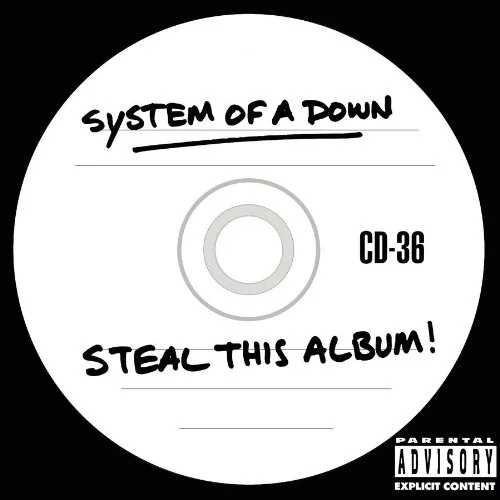
TIDAL Wave: Streaming Audio & The Debate Over Artist Compensation
The world, and everything in it, is made of art. I am not being hyperbolic or exaggerating. The world is literally art. The buildings we enter, the streets we walk on, the parks we walk in - it’s all art. Someone had to envision these things, create a schematic, and build it in order for us to experience it as part of our everyday lives. No one will argue that. For musicians they need instruments, a way to record, an idea and time to make something we might consider magic.
“Why do people in this great U S of A … why do they feel like someone who sings, someone who dances, someone who writes, someone who does poetry doesn’t have to be compensated?”
The world, and everything in it, is made of art. I am not being hyperbolic or exaggerating. The world is literally art. The buildings we enter, the streets we walk on, the parks we walk in - it’s all art. Someone had to envision these things, create a schematic, and build it in order for us to experience it as part of our everyday lives. No one will argue that. For musicians they need instruments, a way to record, an idea and time to make something we might consider magic.
In March Jay-Z, Beyonce, Madonna, Kanye, Rihanna and Daft Punk (clad in the mask get up and all) among others , stood on stage and introduced the world to Tidal - a streaming music service that is artist led. Streaming music has been steadily growing over the last decade. The idea was born out of the growth of the MP3 format audio file. Once high-speed internet entered homes in the early-2000’s and Napster surprised (read: snatched the wig of) the music industry, it also made realistic the idea that the internet could support music being streamed, for a fee, without a physical file local on the computer .
My first experience with streaming music was actually in the mid-1990s. I could listen to NetRadio from my college computer lab, because the internet was so fast. It was rather cool to be able to listen to music while I wrote my papers. It wasn’t until Real Rhapsody (eventually they split from Realplayer and became simply Rhapsody) that I experienced my first streaming service that wasn’t set up like a radio station, and included albums from major labels that I could listen to - the difference was the low monthly fee of $9.99 (Spotify’s current monthly cost, by the way).
Today, as I flip through my phone, I have no fewer than 6 different ways to stream music - Amazon Prime, Google Play, TuneIn, Spotify, Soundcloud, MixCloud - not to mention the vanity apps for radio stations I have installed. It doesn’t take long to wonder - how in the world can an artist be paid from all of these different, competing apps, some that are free with little advertising? It also begs the question, if I already pay for Spotify, why in the world would I purchase something like Tidal?
Americans don’t like to pay for art. That’s a broad stroke, but hear me out. In 2014 Spotify had about 10 million paid subscribers in America. Sounds like a great number right? In 2014 Spotify was actually averaging 40 million monthly active users. So there are actually 4x the number of people listening than are actually paying to listen. This means what these services can afford to pay is compressed, because they have to keep the services running, pay royalties and somehow turn a profit. In November, 2014 it was reported “Spotify, the company that has come to symbolize the growth of streaming music around the world, had more than $1 billion in revenue in 2013. But it has yet to turn a profit.” (NYTimes.com)
How we right this ship is a complicated discussion, because it’s never been right to begin with. Ask Little Richard or Sly Stone if the music industry pays artists. What’s clear is that Tidal hasn’t decided how it’s any different from Spotify, Beats Music, Pandora et. al. for artist compensation. So, next time you stream your favorite indy artist’s album, ask yourself if they can buy a soda with your stream. Spoiler alert - they can’t.

Soulection: The Once and Future of R & B
When Los Angeles-based Soulection released “Love Is King,” a tribute mix to Sade, the response was both immediate and noteworthy. The collection of mixes, crafted by label beatmakers, gave a whole new soundscape to familiar and beloved songs by the band and placed it’s eponymous lead singer in a new context – celebrated and adorned. Almost like a very elaborate “thank you” for … existing.
When Los Angeles-based Soulection released “Love Is King,” a tribute mix to Sade, the response was both immediate and noteworthy. The collection of mixes, crafted by label beatmakers, gave a whole new soundscape to familiar and beloved songs by the band and placed it’s eponymous lead singer in a new context – celebrated and adorned. Almost like a very elaborate “thank you” for … existing.
Before we continue, I must admit, I am not a fan of sub-genre naming. Sometimes it makes sense, but like “neo-soul” - that was kind of stupid – it is just soul, folks. I don’t consider “Future R & B” a genre as much as it is an idea. It exists firmly in the now, while reaching back to the past.
This isn’t a new concept, of course – Funk (an appropriate sub-genre, mind you) is a precursor to this idea. Take pieces of musical experiences, put them in the wash then rinse and spin it through your personal filter.
In modern R & B, the first glimmers of what the “future” sound could be appeared in 1997 – “One In A Million.” The album was full of masterfully crafted electronic, bass heavy, rhythms with a sweet, high-pitched voice on top (courtesy of Detroit daughter, Aaliyah). The title track encapsulates the idea perfectly. It’s a classic R & B song, one in which you can imagine a standard jazz version existing, for instance. Rooted in R & B traditions, but placed firmly in the year it was created. Both a logical and illogical blending of hip hop, soul, jazz and funk.
It’s in this context that the sounds of many of the beatmakers of Soulection take shape. It’s clear that they grew up idolizing the Timabalands and The-Dreams of the world, but have the youth, talent and access to the tools to create a new sound.
Interestingly, this sound has the potential to do something unexpected. It teaches history.
It’s fitting that the label used Sade to celebrate having 200K followers. We only get a record from the band once a decade, at this point – i.e. twice a generation. That means that a listener’s connection to this pivotal act is diminished, because there’s no new material.
By using current beat making techniques, and layering in classics, the Soulection sound is breathing new life into music that changed the time it was created in. Now, those past songs have the opportunity to change the future.
Wear your shades - the future's bright!
To Pimp A Culture – From "Compton" To Here
In 1991, when the MP3 audio format was just becoming more than a twinkle in the eyes of developers, rap music was on the verge of making a sharp left turn. Few of us knew how drastic the change would be. It certainly paralleled the tenor of the US at that time.
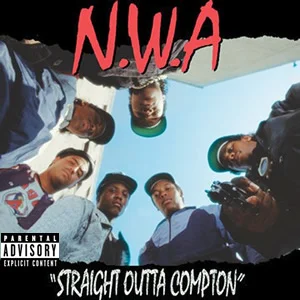
Cover Art: "Straight Outta Compton" by N.W.A. (Ruthless/Priority/EMI, 1988)
In 1991, when the MP3 audio format was just becoming more than a twinkle in the eyes of developers, rap music was on the verge of making a sharp left turn. Few of us knew how drastic the change would be. It certainly paralleled the tenor of the US at that time.
Remember George H.W. Bush, Jack Kevorkian, Jean-Bertrand Aristide, “Peace In The Middle East,” and Rodney King? Yes, the world was very different, then.
For a brief moment, let’s stay with Mr. King. Before the Los Angeles Rodney King police brutality video and subsequent riot after officers were acquitted, New York City was the center of the Hip Hop universe. A few short years before that, though (in 1988), an album had emerged – “Straight Outta Compton.”
The album cover was immediately striking. Why? The gun. Yes, there had been guns on Rap album covers before, but this gun – this gun was pointed at me (… and you) while we were lying down looking up at it. This is not a position anyone wanted to be in, of course, but it was happening. “Straight Outta Compton,” while profane, was rather pro-black militant, however. The album opened with the Dr. Dre exclaiming “you’re about to witness the strength of street knowledge.” It was on! The spotlight on California was being turned up and rap music was publically growing up.
The album cover for “Straight Outta Compton” has been lauded as one of the best album covers – ever. It communicated what had been simmering in the consciousness of Los Angeles for many years , communicated what was happening at the time and it foretold the direction that the music (and the world, frankly) would take. Thanks to photographer Eric Poppleton for capturing this vivid image.
By 1991, the West Coast – Los Angeles, in particular – had made significant inroads into the Rap music landscape commercially, and in a short year later would take over completely with the release of “The Chronic.”
Fast forward 24 years.
The MP3 has not only been birthed, but is now all grown up, and is a standard for how music is not only transferred digitally, but consumed by the music buying public. Record stores – virtually closed or hanging on by a thread. Cassettes – nostalgic. CDs – passé. Vinyl – what is that?
I often remark how I miss having physical album art, because I learned a lot about the background of the music having it, and I also had something cool to put on the wall. Album art, however, is not prevalent, because music isn’t consumed as a physical product anymore.
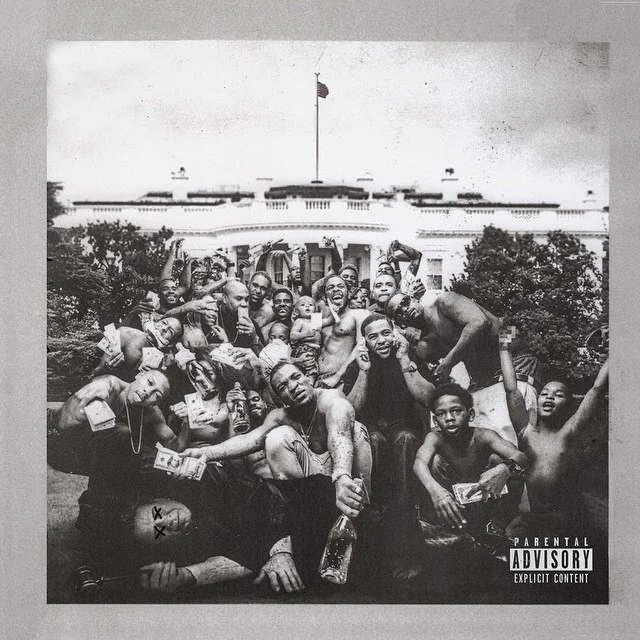
It’s in this context that the excellent album cover for Kendrick Lamar’s “To Pimp A Butterfly” emerges. Now, I’ll admit, the fact that both of these artists are from Compton didn’t dawn on me when I made the decision to talk about these two covers, but I do find the fact interesting.

Cover Art: "To Pimp A Butterfly" by Kendrick Lamar (Top Dawg/Aftermath/Interscope, 2015)
While in 1988, “Straight Outta Compton,” was bold and brash, in 2015 we are virtually desensitized to such content. So, I’m going to make a statement now that you may disagree with.
If we took the album cover for “To Pimp A Butterfly” and placed it in 1988, it would be even more controversial than the “Straight Outta Compton” artwork.
Why do I say that?
In 1988 the country was still very conservative and rap music, as a phenomenon, was still young and evolving. An album cover depicting overzealous, shirtless black men holding stacks of money, champagne and children while standing on the white house lawn and crushing (to death) “the law” would have not only outraged White America, but would have infuriated Black America. What’s even more startling is that the image that is depicted, while not actually being the norm today, is the most common depiction of black men that we see.
If we piece together the time between “Straight Outta Compton” and “To Pimp A Butterfly” the arrival at this cover makes perfect sense. It’s today. It’s now. It’s post-crack. It’s post-Katrina. It’s post-Iraq. It’s post-Tech boom. This is how black men are seen by the world – uncontrollable, sexualized, not law-abiding and careless.
Admired.
Butterflies.
Hated.
Pimps.
Album cover art isn’t insignificant. I’d argue the packaging is as important as the content. It communicates the artist’s vision, and it also serves as a slice of life for where we are as a society at that moment.
From “To Pimp A Butterfly” where do we go from here?
"Blurred" Ruling - How Inspiration Became Infringement
First, a little backstory ...
When I first heard "Blurred Lines," I was in a club. I had been dancing, when I suddenly stopped mid-dance, turned to Brody and exclaimed "what the hell is this?" He then informed me that it was the new Robin Thicke song. I remember curiously listening, deciding that I didn't really dig it, that they channeled Marvin almost to the letter with the groove, but not quite.
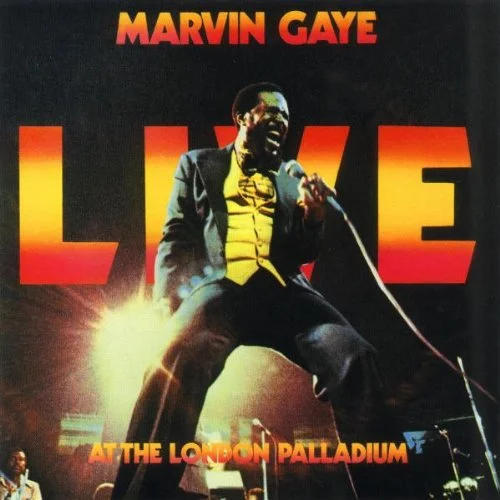
Cover Art: "Live At The London Palladium" by Marvin Gaye (Tamla Records, 1977)
First, a little backstory ...
When I first heard "Blurred Lines," I was in a club. I had been dancing, when I suddenly stopped mid-dance, turned to Brody and exclaimed "what the hell is this?" He then informed me that it was the new Robin Thicke song. I remember curiously listening, decided that I didn't really dig it, and that they channeled Marvin almost to the letter with the groove, but not quite.
Fast forward ...
"Blurred Lines" is literally everywhere, undoubtedly making tons of money, and still heavily steeped in a very distinct groove - (Pause). "Got To Give It Up" is a very unique sounding song from the head of Marvin himself, but influenced by elements of funk, jazz and doo-wop. It uses a recognizable percussive arrangement, that, if imitated, would instantly remind you where it came from. Sidebar: It unseated "Dreams" as the Hot 100 #1 song in 1977. "DREAMS" - yes, by Fleetwood Mac - that amazing song.
I was shocked when I learned that the writers had launched a preemptive lawsuit against the Gaye family to prove the song's originality. I was shocked not because I think they stole "Got To Give It Up" - they clearly didn't - but because "Blurred Lines" was a heavily influenced song. So much so I thought that Gaye should have been credited in the first place. Remember, "Got To Give It Up" is really distinct.
This is where the traditional rules of how to think about copyright infringement get a little muddy. There's always been the thinking that "you can't copyright a groove" in music. Generally, I think that's true, because everything is an influence on something. This case challenges that idea, because in some cases that sound, rhythm or combination is so distinct that it truly is intellectual property that may be, in fact, uniquely owned and can be challenged. I just can't think of a time when anyone has actually tried to challenge it before.
There are certain rhythm patterns that seem like they've always been in existence. Reggae music is a good example of this. Ask any person what reggae sounds like and they're guaranteed to give you the same guitar pattern. Which is based on the drum pattern, and is distinct to that genre of music. Infringement? Maybe 50 years ago yes, but now, I'd argue no. Who owns that rhythm pattern? It's public domain at this point, because it's on so many recordings.
I didn't think the Gaye family would win their lawsuit, based on the way these cases have been tried before, and it was clear it wasn't the same song. I was both excited and scared when they did win.
The sky isn't falling.
This doesn't mean that artists can't use influence to create anymore. It does mean that acknowledging that influence and how to proceed with it may be something to think about. (Do it after you're done as to not impede your creative process. Trying to not do MJ, while trying to be MJ-like is just too much thinking, ladies and gents.) Use your network to ask the questions if you need to. I would have advised the writers engage the Gaye estate for permission to credit Gaye and ensure royalties were paid. It was just the right thing to do in this case.
In closing, this is a good time to mention that this ruling does have implications in all areas of creative expression. Painters - watch out for using distinct strokes, color pallets and composition ideas. Choreographers - watch out for using certain movement combinations from key pieces. The line is a bit more blurred.
This note was inspired by this article. I did not copy, infringe, quote or interpolate it. :-) I think it's good reading though. http://www.vulture.com/2015/03/what-the-blurred-lines-ruling-means-for-music.html